
15 Sep The Importance of STEM Education
Reading Time: 32 minutesThe Importance of STEM Education: Inside the Best CBSE School in Punjab for Future-Ready Learning
As society’s needs change, so too is education, and schools nowadays are concentrating on the sorts of skills that will enable students to face a changing future. Doaba Public School Parowal understands how important it is to give students learning experiences that are meaningful and go beyond simply memorizing information. For families who are looking for the Best CBSE School in Punjab, a method that blends academic knowledge with practical learning can make a significant difference to a child’s development.
STEM is an acronym for the Science, Technology, Engineering, and Mathematics areas. In STEM, students come to understand ideas by means of observation, carrying out experiments, analysis, and solving problems. While memorizing information, they also have the opportunity to see how this knowledge can be applied in real-life circumstances. This type of education is not only interesting but also helpful in many situations in life.
How Schools in Garhshankar Build Problem-Solving Skills
One of the most prominent benefits of STEM education is the emphasis it places on problem-solving. Learners learn to ask questions, examine data, run tests, and find feasible solutions. Instead of waiting for one correct solution, STEM programs provide learners with an opportunity to look into several possible ways and see which solution could be better than the other. In addition, the process allows developing logical skills and learn how to benefit from mistakes. For example, learners conducting a science experiment or building a model can face unexpected results. Instead of seeing the exercise as a failure, they can examine the result, make changes, and reassess the situation.
How CBSE Schools in Punjab Are Encouraging Creativity and Innovation
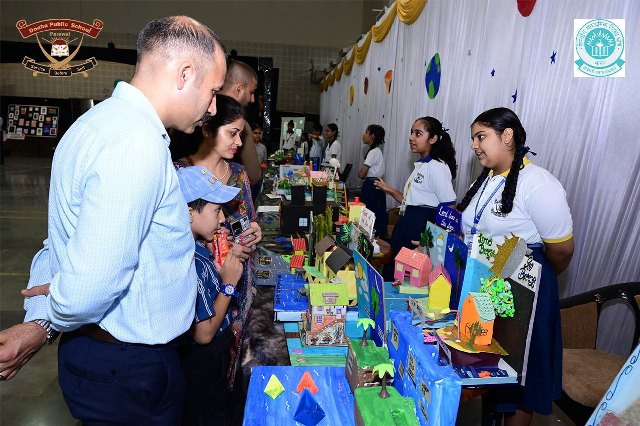
STEM learning is not only about formulas, equations, and scientific concepts. Creativity is an important part of the process as well. Students may be encouraged to design models, build structures, conduct experiments, create projects, or think of solutions to common problems.
When students are given the freedom to explore their own ideas, they can become more comfortable with experimentation. They begin to understand that there may be several ways to approach a problem.
Combining creativity with scientific thinking can also encourage innovation. Students learn to ask questions such as “What if?” and “How can this work better?” These simple questions can develop curiosity and help children approach challenges with an open and inventive mindset.
Preparing Students for Future Opportunities
In today’s world, technology forms an important aspect of education, communication, business, health care, transport, and almost all aspects of life. This means that scientific and technological literacy has grown to be very important.
STEM education provides students with ideas and skills that prepare them for future paths in academics and careers. Students’ ability to analyses information and use knowledge practically can be developed through engagement with technology, experiments, coding, engineering, mathematics, and projects.
For parents comparing a CBSE School in Punjab, it can be useful to understand how the school incorporates practical and experiential learning into its educational approach. A learning environment that encourages students to explore technology and solve real-world problems can help them become more confident when facing new situations.
Making Classroom Learning More Engaging
Traditional classroom learning has its importance, but students can often understand concepts more effectively when they have opportunities to see those concepts in action.
STEM activities can make learning interactive through experiments, educational technology, models, coding exercises, demonstrations, and projects. Instead of only reading about a scientific principle, students can observe it through an activity and understand how it works.
Hands-on learning can also encourage students to participate actively. They can ask questions, make observations, discuss their findings, and explain their reasoning. This active involvement can make lessons more meaningful and help students connect classroom concepts with real-life experiences.
Building Collaboration and Communication Skills
STEM projects often provide opportunities for students to work together. A group may need to design a model, conduct an experiment, solve a challenge, or present a project to their classmates.
Working as a team-teaches students how to communicate their ideas clearly, listen to different opinions, divide responsibilities, and respect the contributions of others. It also helps them understand that successful outcomes can depend on cooperation.
Communication is equally important. Students may need to explain how their project works, discuss their observations, or present their conclusions. These activities can gradually improve their confidence in expressing ideas.
Parents can consider such opportunities when evaluating a school’s overall approach to student development. Academic learning combined with collaboration, communication, creativity, and practical activities can contribute to a more balanced educational experience.
Developing Critical Thinking Through Practical Learning
STEM education encourages students to look closely at information before concluding. They can learn to ask questions, compare possibilities, identify patterns, and support their ideas with evidence.
For instance, during an experiment, students may make a prediction before observing the outcome. After completing the activity, they can compare the result with their original prediction and think about why the outcome was different or similar.
This process develops critical thinking. Students learn that asking questions is an important part of learning and that changing their approach after gaining new information is a strength rather than a weakness.
Why STEM Matters When Choosing a School
Choosing a school is an important decision for parents because the learning environment can influence a child’s academic, social, and personal development. While academic performance remains important, parents may also consider practical learning, extracurricular activities, technology integration, sports, creativity, and opportunities for skill development.
Families searching for the Best CBSE School in Punjab can look at how a school combines academic foundations with opportunities for exploration and application. A school that encourages STEM learning can help students develop curiosity while giving them practical ways to understand concepts.
STEM education can therefore become an important part of a broader approach to holistic learning. It helps children understand that education is not simply about remembering information for an examination. It is also about asking questions, finding solutions, working with others, and applying knowledge to real-life situations.
Frequently Asked Questions
1. What is STEM education?
STEM education combines Science, Technology, Engineering, and Mathematics through practical and engaging learning experiences. It encourages students to explore concepts, experiment, solve problems, and apply their knowledge.
2. How does STEM education benefit students?
STEM education can help students develop problem-solving, critical thinking, creativity, communication, collaboration, and analytical skills. These abilities can support both academic learning and future career development.
3. Why is practical learning important in STEM?
Practical learning allows students to see how concepts work in real situations. Experiments, projects, models, and technology-based activities can make lessons more interactive and help students understand concepts more effectively.
Final Words
STEM education plays an important role in helping children become curious, creative, and capable learners. By bringing together science, technology, engineering, and mathematics with practical experiences, schools can help students understand concepts while developing skills that extend beyond the classroom.
For parents looking for the Best CBSE School in Punjab, a school that balances academics with STEM, creativity, collaboration, and experiential learning can provide children with a strong foundation for the future. With the right learning environment, students can become confident thinkers who are ready to explore new ideas, solve problems, and contribute positively to an ever-changing world.
Sorry, the comment form is closed at this time.